Friday, September 6, 2013

The Quaint and Grand Driehaus Museum


I was walking northbound on State St., en route to coffee with a friend at the Starbucks near Chicago Ave. and Wabash St.  I had just read about the Driehaus Museum, so it was fortuitous that I'd run into it.  It's just west of Michigan Ave., and tucked away from the hustle and bustle of the Magnificent Mile.  Which, to my eyes, made the Museum both quaint and grand.  

Driehaus Museum
The Richard H. Driehaus Museum immerses visitors in one of the grandest residential buildings of 19th-century Chicago, the Gilded Age home of banker Samuel Mayo Nickerson. Chicago philanthropist Richard H. Driehaus founded the museum on April 1, 2003 with a vision to influence today’s built environment by preserving and promoting architecture and design of the past. To realize his vision, Mr. Driehaus commissioned a five-year restoration effort to preserve the structure and its magnificent interiors. Today the galleries feature surviving furnishings paired with elegant, historically-appropriate pieces from the Driehaus Collection of Fine and Decorative Arts, including important works by such celebrated designers as Herter Brothers and Louis Comfort Tiffany.
Today, the Museum is a premier example of historic preservation, offering visitors an opportunity to experience through its architecture, interiors, collection, and exhibitions how the prevailing design philosophies of the period were interpreted by artists, architects, and designers at the waning of the 19th century and the dawn of the 20th century.

Whose Moth, Whose Mothers?


A year ago this month, I was driving from one meeting in Chicago and heading to my next one in Evanston.  I was eastbound on Chicago Ave., and saw a snarl at the intersection with Michigan Ave.  So instead of making a left turn there, I kept heading east.  My plan was to circumvent the traffic snarl.

I knew the Museum of Contemporary Art was nearby, and that was exactly where I needed to turn left.  Immediately I saw this enormous installation in front - MOTHERS, by Martin Creed.  I parked the car right there and then, and slipped out to take a couple of photos.

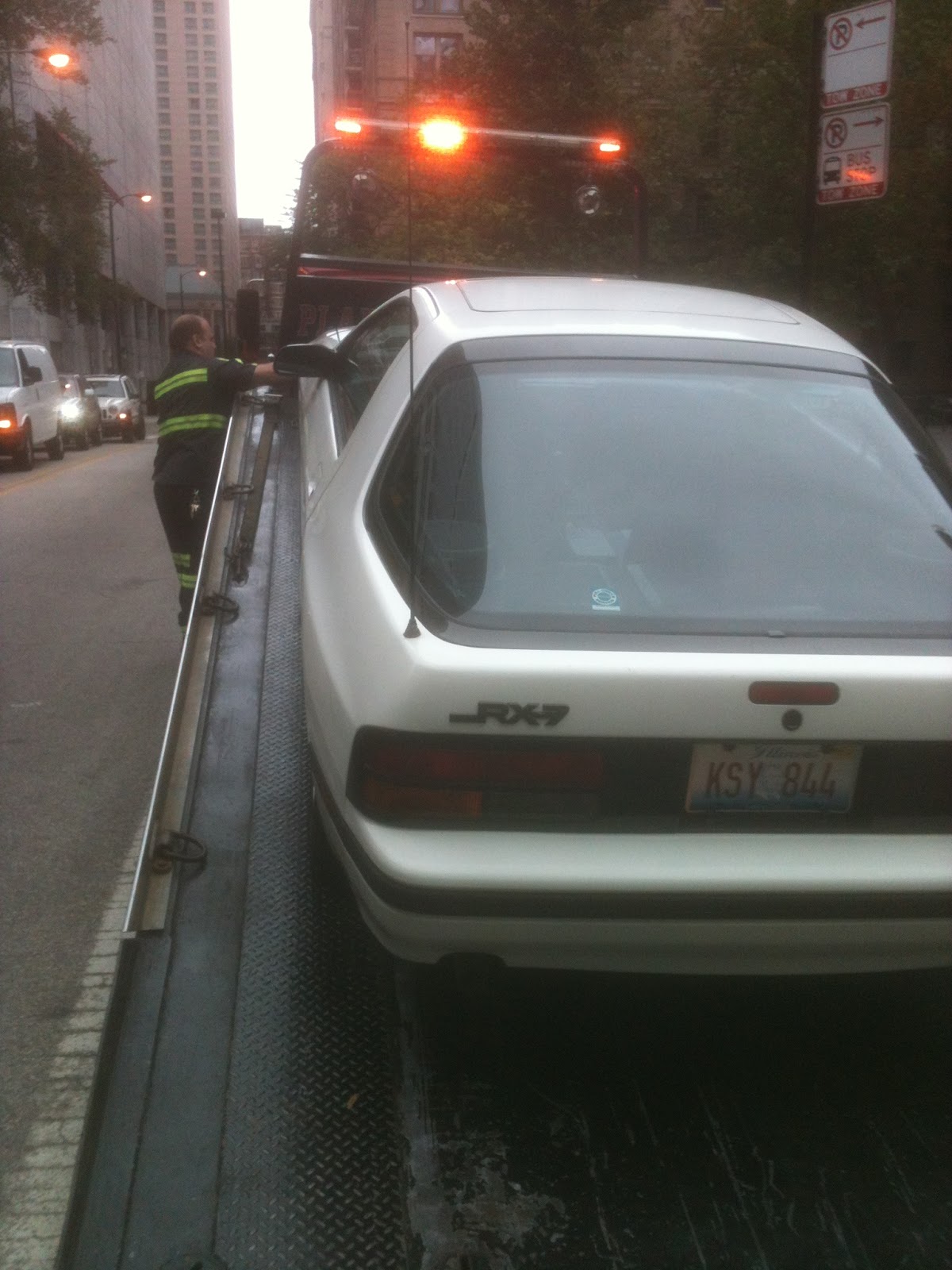
My car stalled out, unfortunately, so I was going nowhere anytime soon.  After a few failed attempts to jump-start it, I called a towing company.  It was about two hours before I was on the way.  But in the meantime, I came up with a film concept on that installation.


Thursday, September 5, 2013

"Forever Marilyn" was not so Forever


For a time it was Forever... 'The Seven Year Itch,' in downtown Chicago.


Alas, "Forever Marilyn" was only temporary, after all.

(image credit)

(image credits)

"Forever Marilyn" found a mixed reception in Chicago, as some vandals let her know how they felt.

Wednesday, September 4, 2013

Vast Frontiers of Charles Kettering


On a visit to the National Portrait Gallery, in Washington DC

(image credit)  

An American inventor, engineer, businessman, and the holder of 186 patents.  He was a founder of Delco, and was head of research at General Motors from 1920 to 1947. Among his most widely used automotive inventions were the electrical starting motor and leaded gasoline.  In association with the DuPont Chemical Company, he was also responsible for the invention of Freon refrigerant for refrigeration and air conditioning systems, as well as for the development of Duco lacquers and enamels, the first practical colored paints for mass-produced automobiles. While working with the Dayton-Wright Company he developed the "Bug" aerial torpedo, considered the world's first aerial missile.  He led the advancement of practical, lightweight two-stroke diesel engines, revolutionizing the locomotive and heavy equipment industries.
Reference:  Charles F. Kettering.

In working on my Theory of Algorithms and The Core Algorithm, I saw this:  We as human beings cannot possibly enumerate all the points on a line, because there's an infinity.  But we can imagine the infinite, and arrive at a useful, simple algorithm for it.  In this case, it's the linear equation.  

So it is with this inspirational quote from Kettering.  In fact, I believe there is an infinity of frontiers, and it's an open mind that can conceive it and extract its algorithms.

Friday, August 30, 2013

The Guiding Stars for Carl Schurz


On a visit to the National Portrait Gallery, in Washington DC

Carl Schurz

Carl Schurz was quite the figure across countries in 19th century politics.  He championed democracy as a German native, and fought in their revolutionary war against the Prussian Army.  An escape to Switzerland, a rescue mission in Germany, and a residence in France followed.  Emigration and marriage in the UK were in his offing, before the long journey across the pond to the US.
In 1855, Schurz settled in Watertown, Wisconsin, where he immediately became immersed in the anti-slavery movement and in politics, joining the Republican Party. In 1857, he was an unsuccessful Republican candidate for lieutenant-governor. In the Illinois campaign of the next year between Abraham Lincoln and Stephen A. Douglas, he took part as a speaker on behalf of Lincoln—mostly in German—which raised Lincoln's popularity among German-American voters (though it should be remembered that Senators were not directly elected in 1858, the election being decided by the Illinois General Assembly). Later, in 1858, he was admitted to the Wisconsin bar and began to practice law in Milwaukee. In the state campaign of 1859, he made a speech attacking the Fugitive Slave Law, arguing for states' rights. In Faneuil Hall, Boston, on April 18, 1859, he delivered an oration on "True Americanism," which, coming from an alien, was intended to clear the Republican party of the charge of  "nativism". Wisconsin Germans unsuccessfully urged his nomination for governor in 1859. In the 1860 Republican National Convention, Schurz was spokesman of the delegation from Wisconsin, which voted for William H. Seward; despite this, Schurz was on the committee which brought Lincoln the news of his nomination.
I'm from Chicago, Illinois, and we live just 10 miles south of the Illinois-Wisconsin border.  Schurz never crossed my studies in high school, not that I can remember, but I'm glad to have known about him now.  He was a German revolutionary, an American statesman, and a US Minister to Spain.  Well-traveled, indeed.

(image credit) 
(image credit)

Apparently Schurz never lost sight of the stars.

The Creative Mind of Hans Hofmann


On a visit to the National Portrait Gallery, in Washington DC

Hans Hofmann
Hans Hofmann is one of the most important figures of postwar American art. Celebrated for his exuberant, color-filled canvases, and renowned as an influential teacher for generations of artists—first in his native Germany, then in New York and Provincetown - Hofmann played a pivotal role in the development of Abstract Expressionism.
Reference:  Hans Hofmann.

To Miz - Pax Vobiscum (1964)
Don Quixote (1963)
Self Portrait (1902)

For the longest time, abstract art didn't quite grab me.  But it was a film I watched last year on Mark Rothko, which helped me better understand and appreciate it.  It is expression without frame or context.  It is expression intended only for what is being expressed:  thought or emotion, color or shape.  It is expression, purely for experience.  

Still, I love portraits, self or otherwise.

Wednesday, August 28, 2013

The Lumbering Spider of Alexander Calder


It was easy enough to be drawn to this sculpture by Alexander Calder, as we in Chicago are familiar with the red Calder Flamingo.  This one, outside the National Gallery in Washington DC, is foreboding and menacing like a giant spider.  Calder may have rendered into art what we see:  It resembles a spider, but out of fright it doesn't quite have the form of one.  Imagine us running for our life, as this monstrosity lumbers along the manicured suburban lawns.  
Arching, arabesque forms energize the sculpture and reveal Calder's famous sense of humor, playfulness and sheer delight with the world. The form of Tom's Cubicle may be read as a whimsical, imaginary animal moving forward on its seven legs. "Tom" refers to Tom Messer, director of New York's Guggenheim Museum at the time when the sculpture was first exhibited there in 1967.
Reference:  Tom's Cubicle.